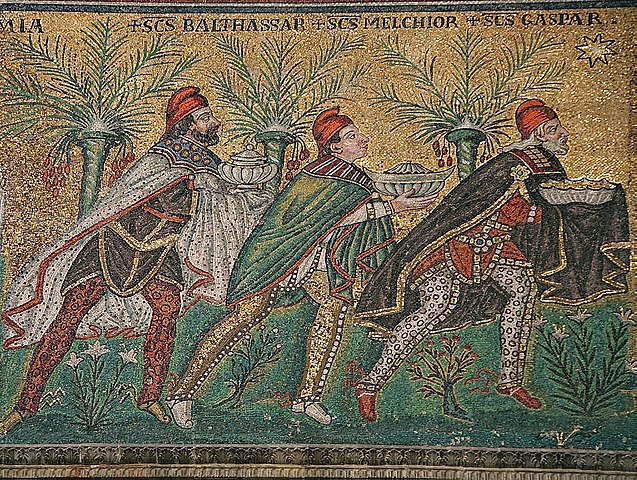
The Three Wise Men, Basilica of Sant’Apollinare Nuovo in Ravenna, Italy (c.526) – from Wikimedia Commons
After her fourth collection Venus Invisible and Other Poems in 1928, Nathalia Crane published in 1929 the novel An Alien from Heaven, then in 1930 a long epic poem titled Pocahontas. Aferwards, nothing more from her appeared, until her fifth collection Swear by the Night and Other Poems published in 1936. In the Foreword, Louis Untermeyer gave the reason for this long silence: CONTINUE READING / CONTINUER LA LECTURE…
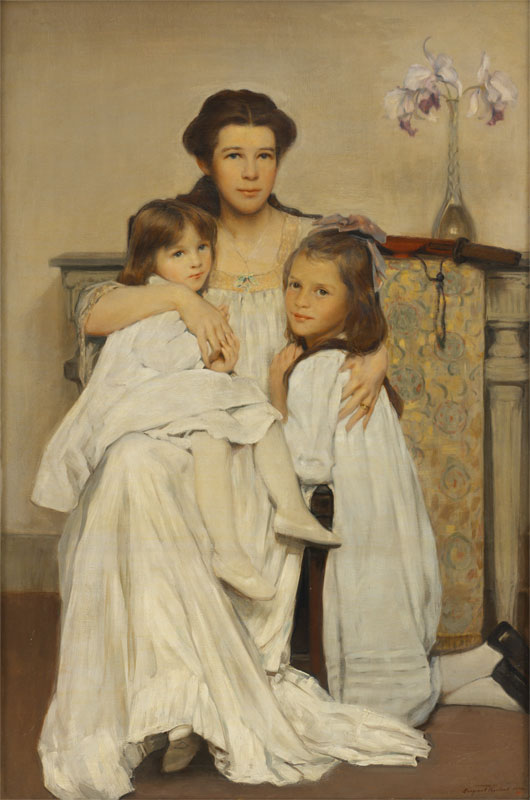
William Sergeant Kendall – The Artist’s Wife and Daughters (1906) – from Springville Museum of Art
several years ago, a reader of Agapeta told me that some ideas expressed in my post Components of Love overlap those put forward by Erich Fromm in his 1956 book The Art of Loving. I have thus read it. CONTINUE READING / CONTINUER LA LECTURE…
Dimples in the face or the body of the loved girl are a frequent theme in Boudoir Ballads, and the following poem extols their charm. Again I chose a painting by Graham Ovenden to illustrate the verse of Joseph Ashby-Sterry. CONTINUE READING / CONTINUER LA LECTURE…
I have presented the song “Don’t Stand So Close To Me” by The Police, relating the temptation of a love affair between a schoolgirl and her teacher. Indeed, the band’s lead singer Sting had previously worked as an English teacher, and he had noticed 15-year-old girls fancying him.
In 2005, the Canadian band Dragonette released its first disc, an EP titled Dragonette EP, with six tracks. The sixth one, called “Teacher Teacher,” describes the same situation, but this time from the point of view of the girl. CONTINUE READING / CONTINUER LA LECTURE…
I found a delightful book of verse in a quite indirect way. A 13 years old poetess who celebrated the 7th birthday of a little girl led, through an artist who photographed and painted girls aged between 8 and 12, to a poet who loved girls aged 16. CONTINUE READING / CONTINUER LA LECTURE…
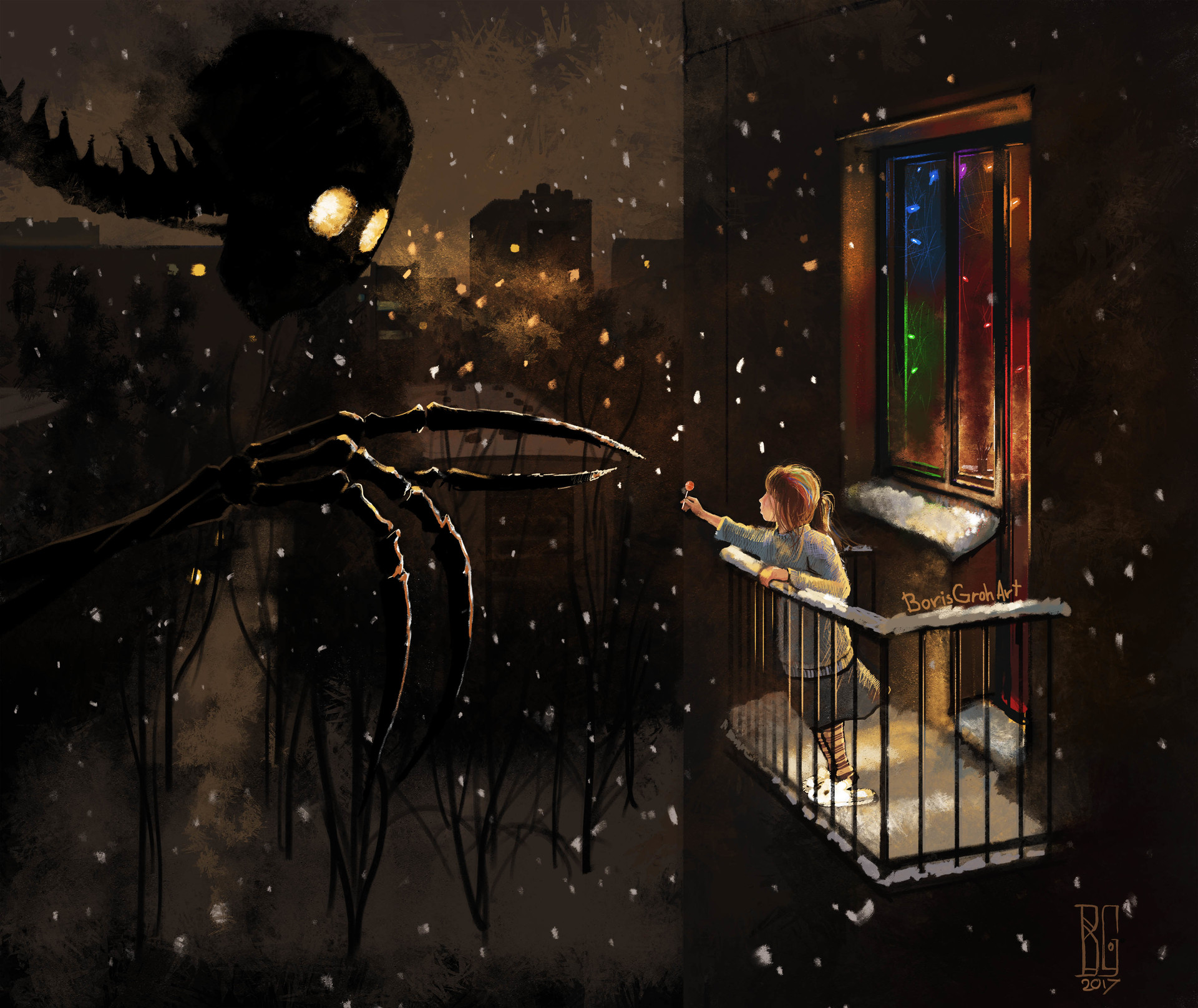
Boris Groh – Christmas Wonders (2017) – from ArtStation
Prince Rogers Nelson (b. June 7, 1958; d. April 21, 2016), known as Prince, was an American artist with multiple talents: singer, songwriter, guitar virtuoso, record producer, dancer, actor, and filmmaker. In some way he represented a dark counterpart of Michael Jackson, and indeed these two contemporary musicians were often rivals.
His 14th studio album (released on October 13, 1992) was titled by a personal “Love Symbol,” and it became his identity, he used it as stage name from June 7, 1993 to May 13, 2000. CONTINUE READING / CONTINUER LA LECTURE…
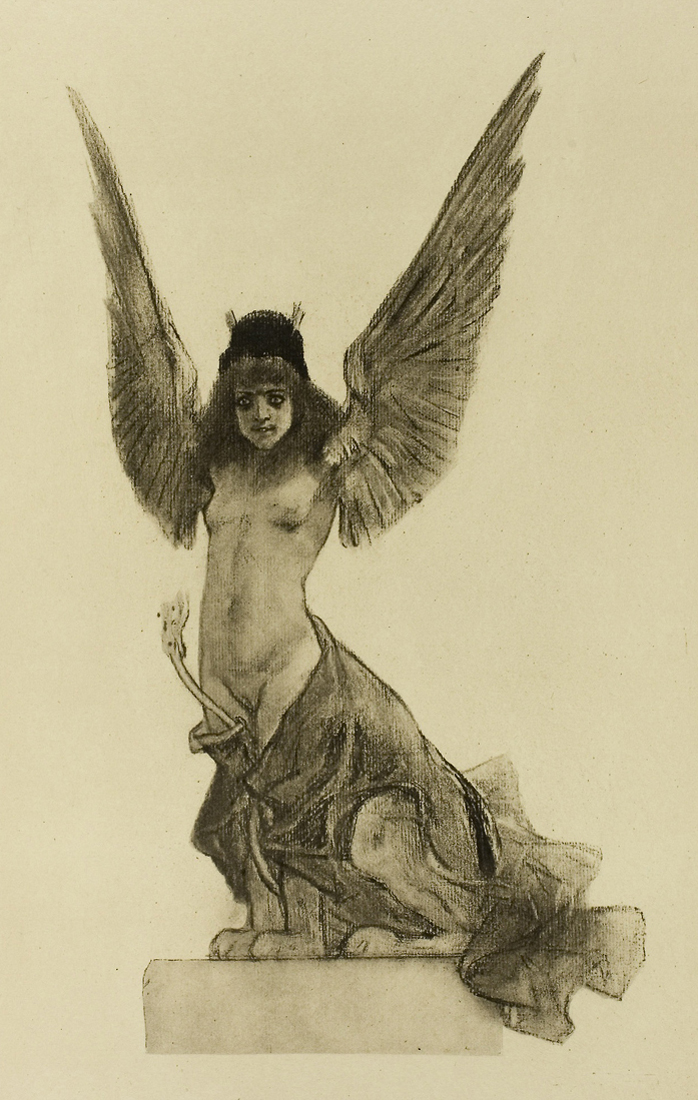
Félicien Rops – Parallélisme, heliogravure (c.1896) – The Art Institute of Chicago, via Wikimedia Commons
Under lockdown, many people lived through Internet, physically separated from the outer world, and regular readers of this blog were probably more assiduous in their visits, waiting eagerly for the next post scheduled three days after the preceding one. Accordingly, floating in a virtual world, I spent much time searching the Web and preparing new posts.
Meanwhile, for many, love, deprived from physical contact, living at distance, became an ideality, filling dreams and desires.
My Love and I took hands and swore,
Against the world, to be
Poets and lovers evermore,
To laugh and dream on Lethe’s shore.
Poets and Lovers exists since one year and a half, it was born privately on March 17, 2019, becoming public on the 20th. This its 218th post. CONTINUE READING / CONTINUER LA LECTURE…
Does our epoch love children? All children? Official opinion will answer “yes,” but we can look behind this façade. Rather than love for real children, it is rather a worship for an idealised image of childhood innocence. Behind it lurks a pornographic obsession with defilement and sadism. We can see this through the accusations raised by various authors against known men of the past who were known for loving children. CONTINUE READING / CONTINUER LA LECTURE…
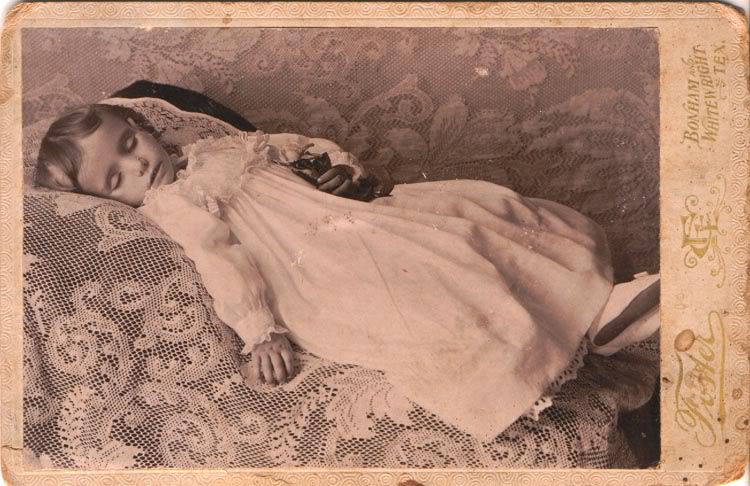
Victorian post mortem photograph – from pixieandrotter.com
James Russell Lowell (1819–1891) was an American poet, critic, editor, and diplomat, who knew some fame through his literary criticism and satirical works. On December 26, 1844 he married Maria White, who wrote poetry and was active in the anti-slavery movement. She convinced him to join the abolitionist cause, and he devoted to it a large part of his writings. CONTINUE READING / CONTINUER LA LECTURE…
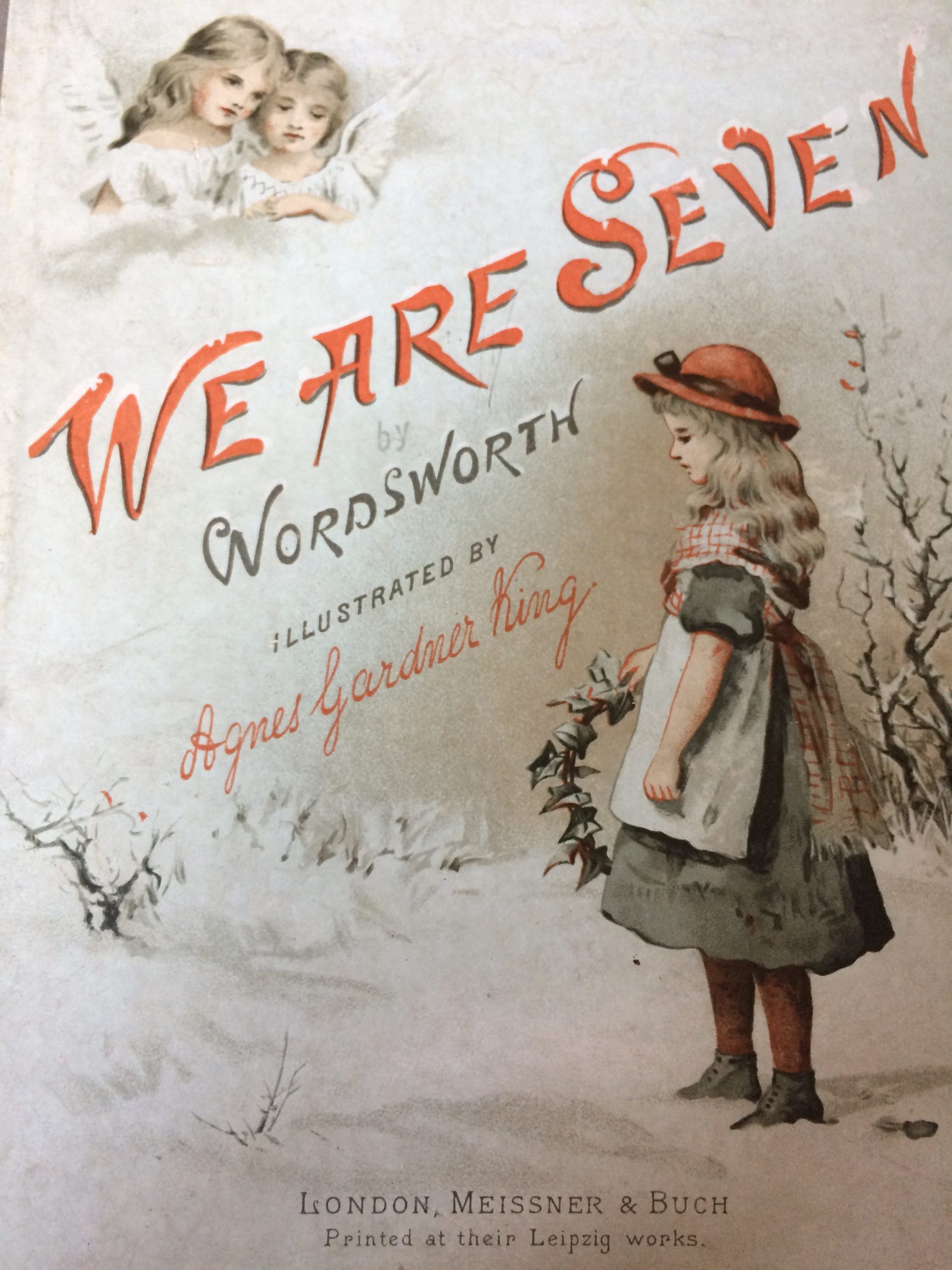
Agnes Gardner King – Illustration for Wordsworth’s We are Seven – from agnesgardnerking.wordpress.com
William Wordsworth (b. 7 April 1770, d. 23 April 1850) and Samuel Taylor Coleridge (b. 21 October 1772, d. 25 July 1834) are major English Romantic poets. In 1798 they published together the collection Lyrical Ballads, With a Few Other Poems, which helped to launch the Romantic Age in English literature. A well-known poem in that collection is the 10th, written by Wordsworth (except perhaps the first stanza written by Coleridge), titled “We are Seven.” CONTINUE READING / CONTINUER LA LECTURE…