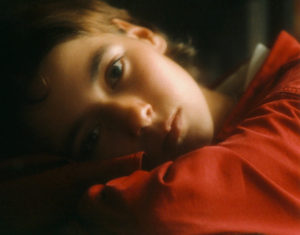

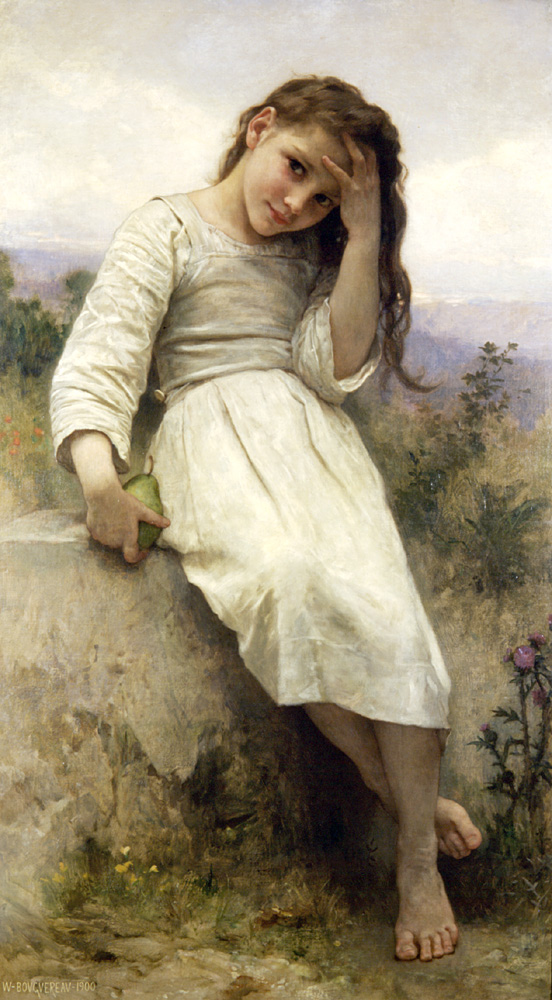
Je suis pervenche, vous m’aimez…
Petites hanches, bien formées,
Poitrine plate, c’est bien mieux,
Reflet d’agate dans mes yeux…
Prunelle glabre, admirée,
Replis cinabre, désirés.
Les nuits des bouges, soirs cinglants,
C’est l’amour rouge, l’amour blanc.
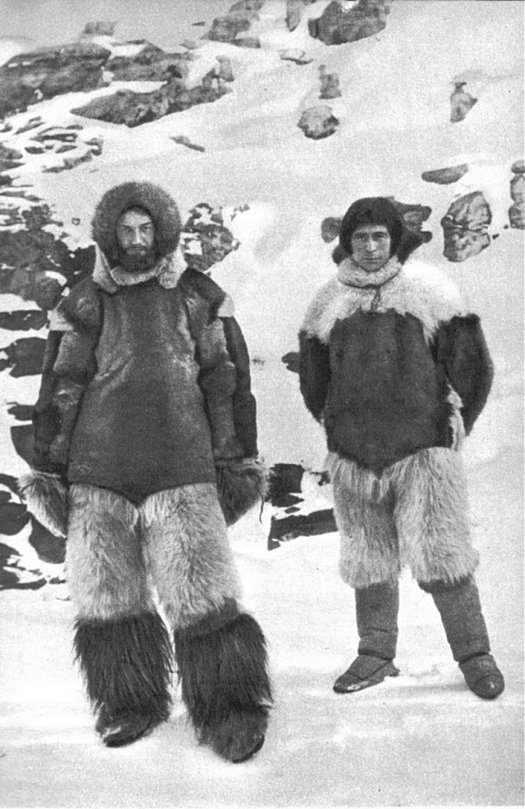
Peter Freuchen and Knud Rasmussen – Photo: Arktisk Institut
The explorer and ethnologist Peter Freuchen (1886–1957) spent a large part of his life in Northern Greenland, exploring it in depth, trading with Inuits and making friends with them. He even married an Inuit girl, Navarana. Living in the most hostile environment in earth, Inuits held a very pragmatic point of view on many matters. In particular, they considered marriage as an economic and family association between a man and a woman, based on solidarity, but without any commitment to conjugal fidelity in relation to love or sex; often men lent their wives to other men, or borrowed their wives, or swapped wives with them, for purely utilitarian motives; they could also see their wives prostituting themselves to Europeans as a good business. Such exchanges were generally decided by husbands; as hunters feeding their family, they considered themselves as superior to women. Inuit men were basically macho, proud of their manly ways. CONTINUE READING / CONTINUER LA LECTURE…

“I Want a Little Girl” is a famous jazz song, ranking 360 among jazz standards according to JazzStandards.com. Written by Billy Moll and composed by Murray Mencher in 1930, it has for over 70 years been interpreted by many famous musicians, in various musical styles: jazz, soul, country and blues. CONTINUE READING / CONTINUER LA LECTURE…
Today I will discuss the various types of feelings and emotions involved in what one calls love, I label them “components.” I am to some extent inspired by the famous book The Four Loves by C. S. Lewis, but while he described them as distinct forms of love, I will rather consider that they can mix together in various proportions through any particular love relation. This idea of mixing different forms of love was developed by John Allan Lee in Lovestyles; however he views them as “styles,” which can be not only emotions, arousals and feelings, but also attitudes towards feelings such as commitment, playfulness or manipulation, as well as degrees of compliance with social norms such as marriage and family. CONTINUE READING / CONTINUER LA LECTURE…
Sabine Sicaud vers 14 ou 15 ans – de sabine-sicaud.com
Un jour d’été 1927, la poétesse Sabine Sicaud, âgée de 14 ans, se blesse au pied lors d’une baignade dans le Lot. La blessure s’infecte, et une sorte de gangrène, l’ostéomyélite, va se répandre dans son corps. Pendant un an, cette maladie lui fera subir des souffrances atroces, qu’elle exprimera dans des poèmes poignants comme Douleur, je vous déteste et Ah ! Laissez-moi crier. Ce long calvaire se terminera par sa mort à 15 ans le 12 juillet 1928. CONTINUE READING / CONTINUER LA LECTURE…

I present here a second poem from the collection Waterside Memories by the famous British artist. Filled with nostalgia, it tells about a young girl seen on a beach, who swam naked; she held the promise of the growth of her girlhood, but the poet did not see her any more. CONTINUE READING / CONTINUER LA LECTURE…
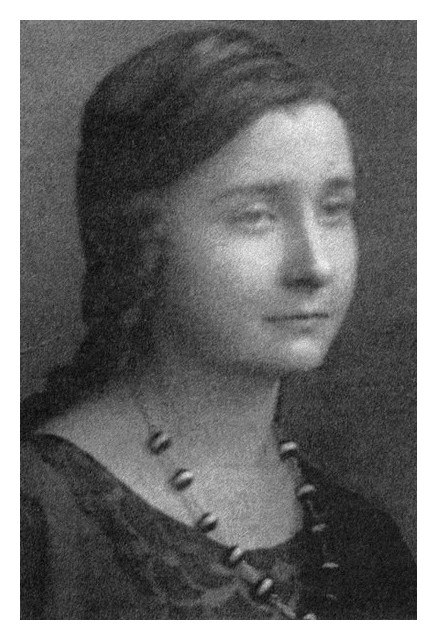
Où es-tu, fille aux grands yeux noirs
De neige, mon bonheur d’un soir ?
Je t’attends, mon amante bleue,
Mon soleil, mon cœur fabuleux. CONTINUE READING / CONTINUER LA LECTURE…
Absinthe: The Green Goddess is an essay in 8 parts by the famous occultist Aleister Crowley, first published in The International, Vol XII No.2, February 1918. It seems to have been composed in the legendary Old Absinthe House in New Orleans. CONTINUE READING / CONTINUER LA LECTURE…
Sabine Sicaud à 12ans, lors de la remise des prix des Jeux Floraux de France – de sabine-sicaud.com
Ce beau poème de Sabine Sicaud, également pris dans son recueil posthume de 1958, respire l’harmonie, la douceur et la paix. La jeune fille semble à nouveau s’adresser à un compagnon imaginaire. CONTINUE READING / CONTINUER LA LECTURE…